This publication provides data and statistical analysis of aviation accident involving large turbo-propeller aircraft.


This publication provides data and statistical analysis of aviation accident involving large turbo-propeller aircraft.
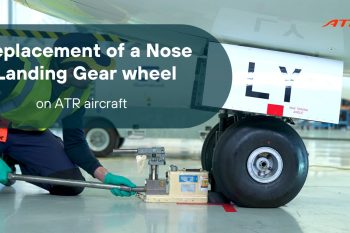
We invite you to watch this video which provides best practices to change a wheel on the NLG.
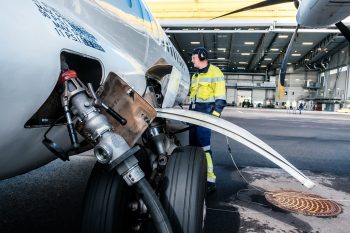
The following article provides best practices to prevent engine fuel starvation when operating under the MMEL with FQI system inoperative.
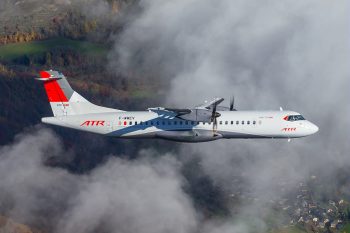
On 29 July 2023, an ATR 72-500 on a scheduled commercial flight climbed in VMC with a target altitude set at FL160 with autopilot engaged and IAS mode. During the climb, the flight was asymmetrical with a sideslip to the left. Passing FL 136, the crew changed the vertical guidance mode from IAS to V/S mode (+300 ft/min). Passing FL 149, an IFSD occurred. The crew managed to recover the upset situation.
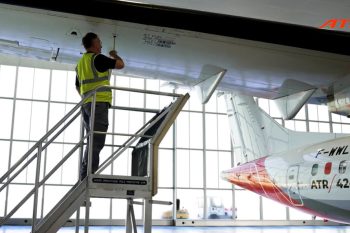
We invite you to watch this video which provides best practices on the ATR pilot pre-flight external inspection.

Following several electrical failures after take-off, the aircraft landed with the landing gear in retracted position.

During disembarkation, one passenger at the top of the steps, held the right-hand handrail. As she began to move down the steps, the handrail collapsed unexpectedly. The passenger lost balance, landed on the apron right and sustained a head injury.

The purpose of this article is to broadcast among all ATR operators the recommendations issued in EASA Safety Information Bulletin n°2025-04 about the use of the Protective Breathing Equipment (PBE).

During the second approach, the aircraft encountered an abnormal runway contact.

During the approach, the left engine shutdown. After landing the right engine also shutdown. The investigation identified that the both in-flight shut down were associated with fuel starvation.

The ATR42 operated a ferry flight from Shah Amanat (VGEG) to Cox’s Bazar (VGCB) airport in Bangladesh. The outer wheel assembly detached from the left main landing gear during take-off.

The ATR72 operated a commercial flight from Kannur to Hubli airport. During the first approach runway 26, the aircraft touched down on the runway and bounced consecutively four times. The crew initiated a “Go-Around”. During the second approach, the aircraft bounced consecutively three times, before coming to rest on the runway. The crew switched off the engines on the runway and requested assistance from the ground staff.

An operator encountered a lateral runway excursion. In this particular event the aircraft sustained minor landing gear damage but the contributing factors are in common with more serious incidents associated with adverse weather conditions (heavy precipitation, reduced visibility and a wet runway). This highlights the benefit of threat and error management training.
Lateral Runway Excursion: report and ATR recommendations

By European regulation (CAT.OP.MPA.260), the captain is responsible to verify before each flight that the aircraft carries at least the planned amount of usable fuel to complete the flight safely, considering the expected operating conditions. This article provides guidance on the recommended fuel policy utilising the aircraft fuel quantity indication system and the fuel uplift calculation.

We invite you to watch this video which provides best practices on the ATR pilot pre-flight external inspection.

Updated in Dec 2021. In the current context, you may need to temporarily switch to cargo operations, using the cabin to transport freight. While this may require the formal authorization from your local authorities, you will find in this article useful advice for establishing these operations in a safe manner.
Actualizado diciembre 2021. En el contexto actual, es posible que deba adaptar temporalmente su operación al transporte de carga usando la cabina de pasajeros. Si bien esto puede requerir la autorización de la Autoridad Nacional competente, encontrará en este artículo consejos útiles para establecer estas operaciones de una manera segura.

An ATR operator has kindly shared a safety bulletin they have issued after they encountered 4 similar events during engine start procedure with Hotel mode.

The ATR fleet has encountered serious events of intentional continuous descent below the published glide path and without confirming the visual reference. This article provides a pilot’s perspective of the challenges our flight crews face on a daily basis and emphasizes the key safety barriers identified in our industry.

Watch this video, which provides best practice on what to do during an emergency evacuation.

Watch ATR PBN solution video which was released in 2017: ATR keeps promoting PBN worldwide for better flight management, fuel saving and safety margins increase.

This article written by the RAeS Human Factors Group in Engineering (HFG:E) project team is an extract from the monthly magazine of the Royal Aeronautical Society, issued in September 2020.

Watch ATR's speech during the Safety in African Aviation virtual event which took place in October 2020.

ATR recently updated the Maintenance Procedure to be performed following Abnormal Runway Contact at landing, including Hard Landing events. It is the opportunity to provide the highlights of these changes.

Find out everything you need to know about the air flow in the #ATR cabin. As more and more airlines and passengers are taking to the skies again we share the necessary steps we’re proactively encouraging our operators to take to ensure that everyone can feel confident about getting back on board and enjoying their flight.

Several safety initiatives have been launched at international level to tackle safety challenges related to ground maintenance operations. ATR was informed in 2018 and 2019 of major ground incidents linked to engine run-up maintenance tests. Fortunately, no fatalities were linked to these events but major damage were reported and 3 ATR aircraft were declared beyond economical repair (hull loss). This article is about preventing the re-occurrence of such incidents by sharing best practices.

The importance of active monitoring is a recurrent key messages provided during ATR Flight Safety conferences. Presentations such as “Watch your speed in cruise”, “Watch your speed in approach” and “Prevention of loss of control” all emphasized this point.

ATR promotes best practices during Ground Handling via a set of 8 clear posters. You are free to download either the one which gathers all 8 pictures or download one by one each poster.


