


An IFSD* occurred around 1000ft before reaching the cruising level with the V/S mode engaged. The IAS decreased significantly leading to an upset situation. The crew recovered control of the aircraft.
The chapters 1 to 5 are factual elements from the published report. Chapter 6 is the ATR additional comments.
(*) IFSD – In-Flight Shut Down
FLIGHT MANAGEMENTS
| Event date : 29 July 2023 | Time : 11:13 LT |
| Place : CONGO | Aircraft : ATR 72-212A |
1. ACCIDENT DESCRIPTION
On 29 July 2023, an ATR 72-500 on a scheduled commercial flight, took off from Brazzaville airport (FCBB), landed at Pointe-Noire (FCPP) in the Republic of Congo. The flight was carrying 73 passengers (5 crew members).
The aircraft climbed in VMC with a target altitude set at FL160 with autopilot engaged and IAS mode. During the climb, the flight was asymmetrical with a sideslip to the left. The aircraft was banked approximately 5° to the left, with the “white ball” yaw indicator indicating a persistent deviation to the left. A repetitive sequence of warning messages on the ADU (RETRIM ROLL L WING DN and MISTRIM WING), TCS activations, and changes to the left aileron tab resulted in moderate roll oscillations (HDG variations of between 5° and 10° throughout the climb).
Passing FL 136, the crew changed the vertical guidance mode from IAS to V/S mode (+300 ft/min).
Passing FL 149, an IFSD* occurred. Over the next 30 seconds, the aircraft’s bank increased to the left. The indicated airspeed decreased down to 128 kt (10 kt below “white bug” (138 kt at 21.5 T), with a maximum pitch attitude of 9.8°, a maximum left bank of 29° and a maximum local incidence of 15.7° (value close to the shaker trigger threshold (15.9°) in this configuration). The crew managed to recover the upset.
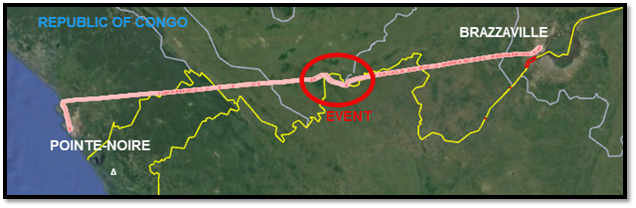
Flight trajectory
2. ANALYSIS
- The IFSD is due to an interruption of fuel supply.
The aircraft carried a total of 1800 kg of fuel, distributed equally between the wings. The recorded flight conditions, characterized by a prolonged sideslip with an average roll of 5° to the left during 23 minutes, compromised the normal operation of the feeder jet pump in the left main fuel tank. Consequently, the left feeder tank was not replenished and gradually emptied due to engine fuel consumption. This situation resulted in an interruption of fuel supply to the left engine, even though the left main fuel tank still contained fuel.
- The prolonged sideslip is a consequence of a blockage of the yaw damper.
The internal servo blockage resulted from significant corrosion of the tachometer, combined with mechanical and electrical failures. These factors likely limited lateral control capabilities to trim during the flight.
- The upset situation after the IFSD is associated with an improper monitoring of the IAS using the V/S mode in climb.
3. CONTRIBUTING FACTORS FROM THE REPORT
- Use of the autopilot’s “Vertical Speed” (VS) mode without monitoring the IAS, led to a significant loss of speed below the VmLB after the IFSD. This could have resulted in a loss of control of the aircraft.
- The lack of effective correction of sideslip observed on the yaw indicator (“white ball”) maintained an aerodynamic asymmetry, causing an imbalance in fuel transfer to the left “Feeder Tank”.
- Insufficient coordination between the PF and PNF, particularly in the allocation of tasks and the management of alerts, delayed the proper implementation of emergency procedures.
- A yaw damper with internal corrosion and a broken ground cable, which went undetected during maintenance operations, impaired yaw control and contributed to the difficulty in trimming the aircraft.
- The presence of two non-essential people in the cockpit, as well as keeping the cockpit door open during the critical phase, disrupted the pilots’ concentration and impaired internal communication, affecting the quality of the anomaly management and decision-making.
4. SAFETY RECOMMENDATIONS
The Bureau of Aviation Investigation and Accidents recommends:
- That the operator strengthen its crew training, with a focus on:
- Asymmetric flight, including the effects of prolonged sideslip on the feeder jet pump.
- Appropriate use of autopilot modes, particularly during climb, emphasizing adherence to the recommended IAS mode and vigilance when using Vertical Speed (VS) mode.
- Crew Resource Management between pilot flying (PF) and pilot monitoring (PM), especially in abnormal situations, through practical simulator scenarios.
- Adherence of QRH procedures, with regular simulator training aimed at emergency situations, including single-engine flight.
- That the operator ensure strict adherence to cockpit access rules by limiting presence to essential personnel only during all critical phases of flight, while strengthening awareness campaigns and controls to limit disruptions that could impair crew performance and compromise the safety and security of operations.
- That the national civil aviation agency strengthen its controls and approval procedures, ensuring strict full and compliant approval of maintenance programs, operating manuals adapted to each aircraft, and effective verification of crew line checks before any authorization for operational service.
5. SAFETY ACTIONS
Following the analysis of the contributing factors identified during the investigation, including those related to flight management in asymmetric configuration and crew coordination, the manufacturer ATR, in collaboration with the European Aviation Safety Agency (EASA), has undertaken the following to operational documentation aimed at preventing the recurrence of a similar event.
- Automatic Flight Control System – 22.1: Climb in VS mode is prohibited.
- Abnormal flight characteristics in roll – A22.01: Extended non coordinated flight can drain the fuel feeder compartment and result in an engine flameout
- Aileron Mistrim – A22.03: Extended uncoordinated flight can drain the fuel feeder compartment. This could result in an engine flame out even with sufficient fuel on board.
- Aileron Jam – A27.15: Counteract the tendency to bank due to an aileron jam can result in sideslip. Extended non coordinated flight can drain the fuel feeder compartment and result in an engine flameout, even with sufficient fuel on board. Therefore, minimum flight time to destination or alternate must be considered.
- Rudder Jam – A27.18: Extended non coordinated flight can drain the fuel feeder compartment and result in an engine flameout
- FUEL LO LVL – A28.06: Extended non coordinated flight can drain the fuel feeder compartment and result in an engine flameout
FCOM updated on revision October 2025.
6. ATR RECOMMENDATIONS
Following the safety action, ATR strongly recommend assessing the operator’s manual and their training manual with the associated update from the FCOM (revision October 2025).
ATR stresses the need for coordinated flight management as training and your company SOPs. Additionally, the report highlights the importance of the maintenance as a key driver for flight safety in line with your maintenance program. Given the damage to the yaw damper the aircraft was not in a suitable condition to operate.
7. FINAL REPORT
The final report in French is available for download at Annex 13 report.

