


On September 2024, the ATR72-600 experienced an engine fire in short final. After landing the aircraft stopped on the runway and an emergency evacuation was performed.
The chapters 1 to 3 are factual elements from the published report. Chapter 4 is the ATR additional comments.
Emergency Evacuation
| Event date : 1 September 2024 | Time : 16:03 LT |
| Place : Wellington (New Zealand) | Aircraft : ATR 72-600 |
1. SERIOUS INCIDENT DESCRIPTION
On approach at around 380ft, the oil pressure on the left engine reduced, triggering the associated alarm. The pilots decided to continue the approach. At around 100ft, an ENG 1 fire warning triggered. The pilot landed on the runway and performed the engine fire on ground procedure.
Both fire agent bottles were discharged. The observations by the airport firefighters indicated that the fire was extinguished shortly after the second agent bottle discharged. However, because of residual heat in the engine nacelle, the engine fire warning light remained illuminated for several minutes afterwards.
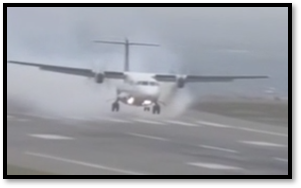
Illustration of engine 1 fire on landing
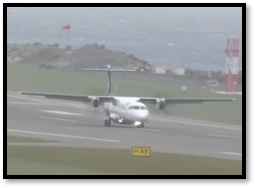
Illustration of the aircraft stopped on the runway
2. INVESTIGATION
The engine-fire warning was initiated by a failure of an LPT blade, which resulted in a vibration in the engine that caused deterioration to some air seals, allowing oil to leak directly into the engine. The resulting low oil pressure in the left engine caused the warning light to illuminate. The combustion of the oil that had seeped onto the engine caused a large volume of smoke, and the temperature within the engine nacelle increased to the point that the fire detection warning was activated.
2.1 Safety recommendation – Pratt & Whitney Canada
The Commission recommended that Pratt & Whitney Canada, as the engine manufacturer for the PW127M engine, take action to ensure the engine quality assurance procedures during engine overhaul are able to identify pre-existing fatigue and ensure the continued airworthiness of the subject engine.
On 24 September 2026, Pratt & Whitney Canada replied: P&WC reviewed the TAIC safety recommendation and accordingly confirm that the applicable LP blade inspection methodology and assessment processes already meet the intent of the recommendations. P&WC will continue monitoring reliability performance of the subject component.
3. EMERGENCY EVACUATION
3.1 Evacuation description
By the time the ATR had landed, both flight attendants were aware that there was an emergency associated with the left engine. On receiving the command to evacuate they looked out through the windows on the left side to see if there was any further smoke or other obstruction. Seeing none, they tested the exits for any heat that might indicate the presence of fire. Next, they opened the exits on the left side and checked outside. Confirming there were no fire or hazards, they then instructed the passengers to evacuate and move clear of the airplane.
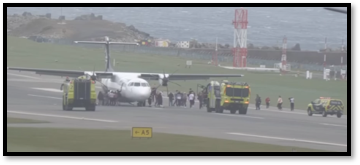
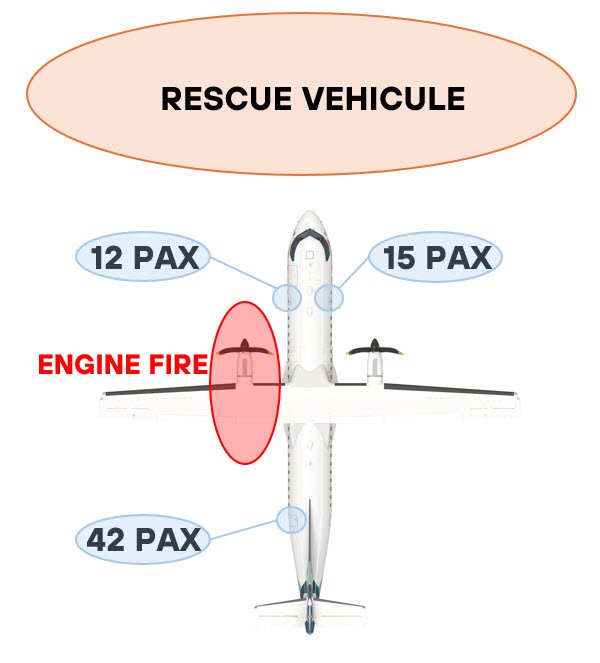
Illustration of the emergency evacuation
3.2 Evacuation investigation
The evacuation call was made using the airplane’s PA system. It was reported by several passengers that at least one fellow passenger did not hear the evacuation call because they were wearing headphones.
Four emergency vehicles attended the event. Two of these were primarily fire-fighting vehicles and two were support vehicles. The lack of an evacuation radio call by the flight crew meant that airport fire freighters were caught unawares when the evacuation started and needed to shift from fire-fighting mode to passenger-control mode.
All four exits were available. The flight attendant (rear) opened the left passenger (exit) door but didn’t open the rear service door. The flight attendant (forward) opened the forward left exit door and a passenger opened the forward right exit door (under instructions).
Right side: The 15 passengers who evacuated using the forward-right exit stayed in a group near this exit.
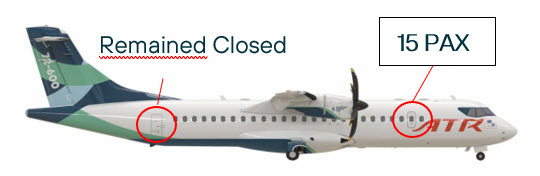
Illustration of the forward right exit – 15 passengers evacuated
Left side: Several of the passengers within the 12 PAX who had evacuated using the forward-left exit moved to join the passengers evacuating using the passenger door. This path took them near the left engine and the propeller. 42 passengers evacuated using the passenger door (rear left).
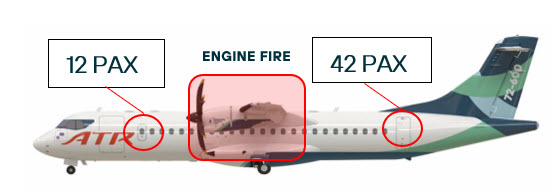
Illustration of the forward left exit and passenger door – 54 passengers evacuated
3.3 Slowdown of the evacuation
In this incident, the airplane was full and evacuation took about 2mn 51 s. This was from the time the captain announced the evacuation call over the PA to when the last cabin passenger was observed leaving the airplane through the forward-right exit. It did not include the four-flight crew and the flight-deck passenger, who remained on board the airplane with the crew.
As with the majority of commercial transport aircraft, ATR has demonstrated compliance to the 90 seconds certification requirement.
The video of the evacuation shows that 19 of the 27 passengers who left through the two forward exits took their carry-on baggage with them. From the available information, the Commission estimated that about half of the passengers who left through the rear-left door took carry-on baggage with them.
During the evacuation both flight attendants instructed passengers to leave their baggage. However, despite this over half the passengers took their baggage with them. The Commission identified several possible reasons for this, including:
- not recalling the before take-off safety briefing instruction to leave baggage behind.
- not hearing the crew’s instructions.
- a desire to take personal items including carry-on baggage. When the flow of passengers exiting slowed, there was time to retrieve their baggage.
- copycat behaviour upon seeing a passenger retrieve a baggage
- no longer observing flames or smoke, there was no obvious threat or urgency
- deliberately ignoring the commands by the flight attendants and that of other passengers to leave behind baggage.
- Several passengers said they were surprised by the small size of the exits (Type III), the difficulty in using them, including having to step up onto the bottom lip of the door and then jump nearly 1.83 m (6 ft) to the ground. One passenger thought that there would be a slide available.
3.4 Safety recommendations – Operator
The Commission recommended that the operator review the Findings and Safety Issues contained within the report to identify further enhancements to crew evacuation training, training realism, passenger safety briefings, safety cards and evacuation commands with the objective of improving crew and passenger preparedness for emergency evacuations.
On 16 September 2026, the operator replied: The occurrence was a challenging event from which there are important lessons. We consider it important to recognize that the crew responded effectively to a fast-developing emergency, applying their procedures and training to achieve a safe outcome. The flight crew landed the aircraft safely, completed the required engine-fire actions and initiated the evacuation. The cabin crew assessed the available exits, managed passengers and directed the evacuation. The aircraft was evacuated without injury.
Since this occurrence, the operator has reviewed lessons from the internal safety investigation and matters identified by the Commission and has implemented, or is progressing, a range of improvements.
- Crew evacuation procedures and training
- Passenger safety information
- ATR cabin emergency evacuation trainer
For further information, please download the final report.
4. ATR RECOMMENDATIONS
Please refer to the ATR video https://safety.atr-aircraft.com/2021/03/16/emergency-evacuation/
5. REPORT
7. FINAL REPORT
The final report in English is available for download at Annex 13 report.

